
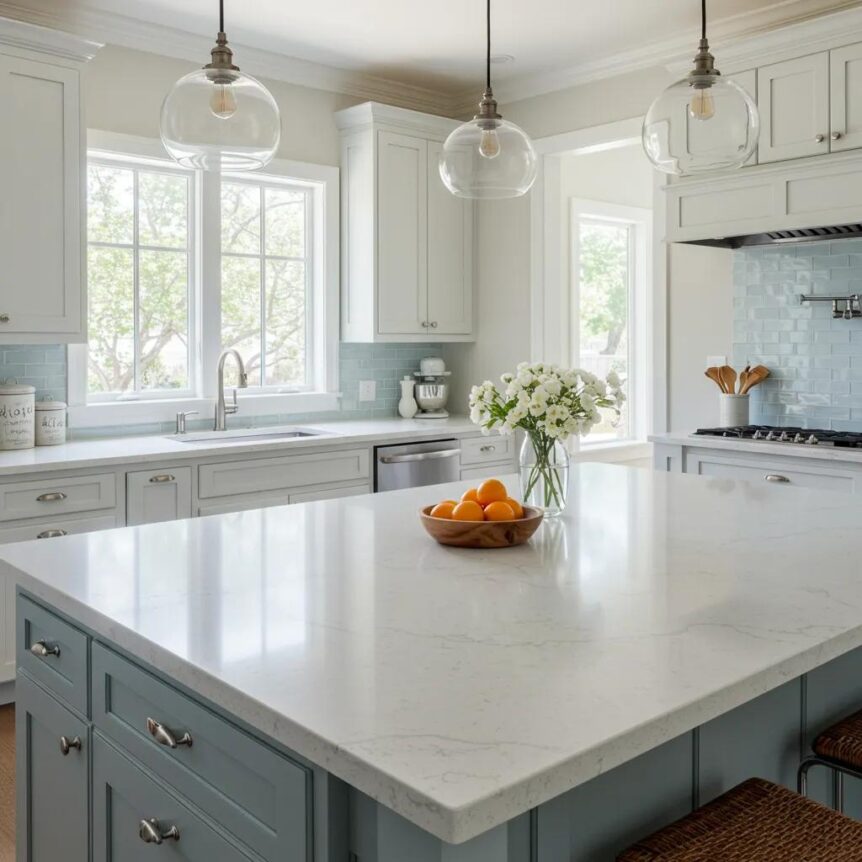
Quartz countertops are engineered stone surfaces made from natural quartz aggregates bound with resin, pigments, and performance additives that deliver exceptional durability and design versatility for kitchens. This article explains why quartz is a leading choice for Fort Lauderdale homeowners seeking a low-maintenance, stylish upgrade that withstands coastal lifestyles and frequent entertaining. You will learn material benefits, 2025 trends tailored to coastal interiors, how quartz compares to granite and marble on measurable attributes, practical care and maintenance, and the step-by-step installation process used by local experts. The guide also highlights real Fort Lauderdale remodeling projects that showcase design choices and measurable homeowner benefits, and it provides clear, actionable lists and tables to aid selection and upkeep decisions. Throughout, we emphasize the engineered-stone benefits of quartz, reference relevant performance metrics such as Mohs hardness and stain resistance, and connect homeowners to local professional services for seamless project delivery. Read on to discover specific quartz color and finish recommendations for 2025, installation expectations, and how to maintain your new surface for long-term value.
Why Are Quartz Countertops the Best Choice for Your Fort Lauderdale Kitchen?
Quartz countertops combine non-porous engineered composition with high quartz content and resin binders, which yield surfaces that resist stains, inhibit bacterial growth, and eliminate the need for periodic sealing. This composition directly produces practical benefits for busy kitchens—simpler cleaning routines, strong scratch resistance, and design consistency across slabs—making quartz particularly suited to family cooking and coastal humidity. The low-maintenance nature reduces lifetime upkeep costs while the wide palette of finishes supports both bright coastal and modern aesthetic directions common in Fort Lauderdale homes. Below is a concise list of the principal benefits that make quartz a standout choice for kitchens in this region. These benefits lead naturally into a closer look at the material science that gives quartz its durability and ease of care.
Quartz offers several core advantages for Fort Lauderdale kitchens:
- Durability: Engineered composition delivers high scratch and impact resistance suitable for daily cooking and prep.
- Non-porous surface: No sealing required, reducing maintenance and blocking stain-causing liquids.
- Design versatility: Available in veined, solid, matte, and honed finishes to match coastal or contemporary designs.
- Hygiene: Non-porous surfaces inhibit bacterial growth, simplifying food-safe cleaning routines.
These benefits explain why many homeowners choose quartz; the next section explains the engineered features that give quartz its durability and low maintenance.
What Makes Quartz Durable and Low Maintenance?
Quartz achieves durability through a combination of high natural quartz content and engineered resin binders that create a dense, non-porous slab resistant to stains and most scratches. The material typically rates near 7 on the Mohs hardness scale for industrially produced slabs, which translates to strong scratch resistance in everyday kitchen use compared with softer natural stones. Because quartz is non-porous, liquids and oils remain on the surface and can be wiped away quickly, which reduces the risk of long-term staining and bacterial harboring. For routine care, mild soap, warm water, and a soft cloth are sufficient; avoid strong acids and abrasive pads to preserve finish. Understanding these maintenance traits sets up how quartz improves kitchen functionality and aesthetic integration.
How Do Quartz Countertops Enhance Kitchen Functionality and Style?
Beyond durability, quartz supports kitchen functionality through seamless fabrication options like integrated backsplashes, undermount sinks, and waterfall islands that enable continuous, hygienic work surfaces and cohesive design lines. Visually, quartz can mimic marbled veining or present consistent solid colors that pair well with coastal whites, muted greens, or deep navy islands popular in Fort Lauderdale interiors, allowing cabinetry and flooring choices to drive the overall palette. In active households, quartz surfaces simplify cleanup after cooking or entertaining, and they withstand everyday family wear while retaining their appearance. Practical design pairings—such as light warm-white quartz with soft grey cabinetry or a honed deep blue island slab—create both visual impact and durable function. These design and functional advantages lead into current 2025 trends that Fort Lauderdale homeowners are adopting.
What Are the Top Quartz Countertop Trends for 2025 in Fort Lauderdale?
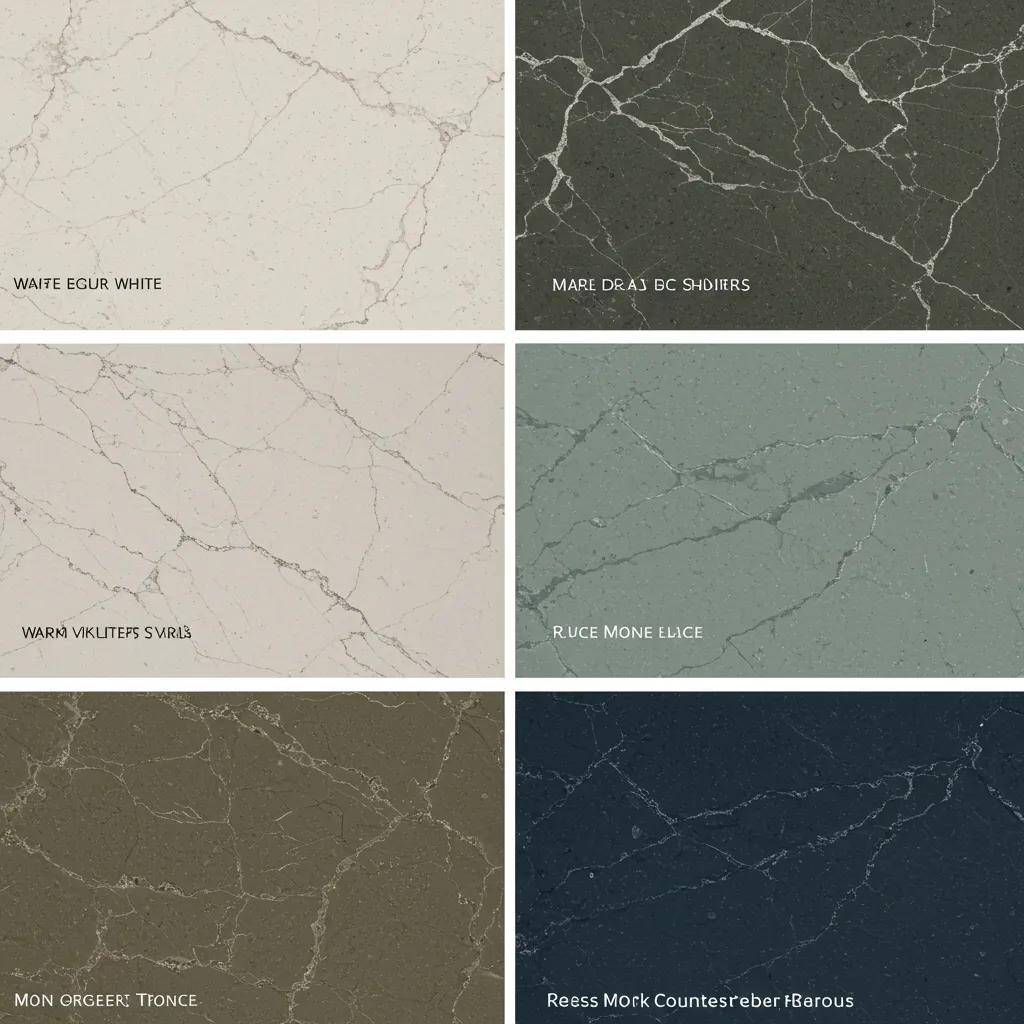
Quartz trends for 2025 emphasize natural-looking textures and finishes, coastal-appropriate color palettes, and sustainable production choices that resonate with Fort Lauderdale lifestyles and resale preferences. Homeowners are favoring warm whites with subtle gold or cinnamon veining for bright beachside kitchens, muted greens and deep navy for contrast islands, and tactile matte or honed surfaces to reduce glare and fingerprints in sunny homes. Sustainability is also a growing factor, with interest in engineered-stone suppliers that prioritize recycled content and lower embodied carbon—an important consideration for eco-conscious buyers. The following list highlights the top trends that designers are applying in Fort Lauderdale projects this year, and the subsequent table maps how each trend fits local design use-cases and applications. These trend patterns naturally lead into specifics about popular colors and finish tradeoffs.
Top 2025 quartz trends for Fort Lauderdale kitchens include:
- Warm veined whites: Bright, reflective palettes with subtle warm veining for coastal light amplification.
- Muted greens and deep blues: Statement islands and contrast surfaces that anchor open-plan kitchens.
- Matte and honed finishes: Textured surfaces that reduce glare and fingerprint visibility in sunlit rooms.
- Sustainable compositions: Options that incorporate recycled content or low-VOC binders for greener projects.
Understanding these trends helps homeowners pick colors and finishes; the table below details practical fit-for-purpose use-cases.
| Trend | Color / Finish / Application | Value for Fort Lauderdale Homes |
|---|---|---|
| Warm veined whites | Warm white slabs with gold/cinnamon veining for counters and backsplashes | Brightens interiors, complements coastal light and white cabinetry |
| Muted greens & deep blues | Muted sage or navy islands contrasted with light perimeter counters | Provides dramatic focal points suited to open-plan living and entertaining |
| Matte & honed finishes | Low-sheen finishes across worktops and islands | Reduces glare from strong sunlight and hides fingerprints in busy kitchens |
| Sustainable quartz | Recycled-content slabs and lower-emission binders | Aligns with eco-aware buyers and can support green remodeling choices |
This trend mapping sets up guidance on specific color families most popular for 2025 and the finish tradeoffs homeowners should consider.
Which Quartz Colors Are Most Popular in 2025?
Warm, bright whites with subtle veining remain a leading choice because they amplify natural light and pair well with coastal palettes, while muted greens and deep navy hues serve as trend-forward island statements that add depth and contrast. Light warm-white quartz works well with white or soft-gray cabinetry and natural wood tones for a breezy, tropical-luxe look and enhances resale appeal in seaside markets. Muted green slabs can reference local plant palettes and complement rattan or cane accents common in Fort Lauderdale interiors, and navy islands pair elegantly with brass or matte-black hardware for a modern contrast. These color choices inform finish selection and lead directly into whether matte and honed finishes are preferable to glossy options in regional contexts.
Are Matte and Honed Quartz Finishes Better Than Glossy?
Matte and honed quartz finishes are increasingly favored because they offer a modern, tactile appearance and better conceal fingerprints and small scratches than high-gloss surfaces, which can be important in Fort Lauderdale homes with abundant sunlight. Glossy finishes reflect more light and can make small kitchens seem larger, but they also show smudges and require frequent polishing to maintain a mirror-like appearance. For high-traffic family kitchens or homes with young children, a honed or matte finish reduces visible wear and supports a relaxed coastal aesthetic. Designers often recommend glossy finishes for formal or infrequently used spaces, while recommending honed or matte for everyday meal-prep surfaces; this consideration naturally leads into how quartz stacks up against granite and marble on performance metrics.
How Do Quartz Countertops Compare to Granite and Other Materials?
Quartz, granite, and marble occupy different positions on the durability-maintenance spectrum: quartz offers consistent non-porous performance and predictable color consistency, granite provides superior heat tolerance and natural variation, and marble offers classic veining but requires higher maintenance due to porosity. For homeowners choosing between these materials, key attributes to evaluate include stain resistance, scratch resistance, heat tolerance, and lifecycle cost. The table below compares quartz, granite, and marble across those practical attributes to help Fort Lauderdale homeowners make an informed choice for their kitchens. After the table, a brief summary highlights why quartz often matches the needs of busy, coastal households better than softer stones.
| Material | Durability & Scratch Resistance | Stain Resistance & Maintenance | Heat Tolerance |
|---|---|---|---|
| Quartz | High scratch resistance; engineered to be dense | Non-porous; resists stains and requires minimal maintenance | Moderate; tolerates everyday heat but protect from direct hot pans |
| Granite | Very high heat tolerance and strong scratch resistance | Naturally porous; periodic sealing recommended to resist stains | High; better for direct hot cookware placement |
| Marble | Softer stone with lower scratch resistance | Porous; susceptible to etching and staining, requires careful maintenance | Moderate; sensitive to acidic spills and heat spots |
This comparison shows where quartz excels for low maintenance and consistent appearance, and where granite or marble might be chosen for specific aesthetic or heat-performance reasons. The following subsection examines durability differences with metric context and practical guidance.
What Are the Durability Differences Between Quartz and Granite?
Quartz typically rates high for scratch resistance because of its engineered quartz content and resin matrix, often approaching a Mohs hardness around 7 for slab compositions used in kitchens, while granite varies but can offer comparable hardness with superior heat tolerance. Granite’s crystalline structure gives it exceptional thermal mass and the ability to handle direct hot cookware more readily than resin-bound quartz; however, granite’s natural porosity means sealing and maintenance are required to keep stains at bay. For practical kitchen use, quartz provides predictable, uniform performance with minimal upkeep, whereas granite demands periodic sealing and more deliberate stain prevention measures. These durability tradeoffs guide safe-use recommendations and lead into why quartz is preferred over marble in many active kitchens.
Why Choose Quartz Over Marble or Other Natural Stones?
Quartz is often preferred over marble because it combines visual options that mimic marble veining with non-porous, low-maintenance performance that resists staining and etching in food-preparation areas. Marble, prized for its classic translucency and veining, requires careful handling, sealing, and avoidance of acidic spills to prevent permanent etching—compromises that are impractical for many busy households. Engineered quartz provides similar visual character without the porous drawbacks, enabling homeowners to achieve a marble-like look with greater longevity and less upkeep. For families and frequent entertainers, this balance of aesthetics and practicality often makes quartz the smarter, lower-lifecycle-cost choice.
What Is the MELTINI Process for Expert Quartz Countertop Installation?
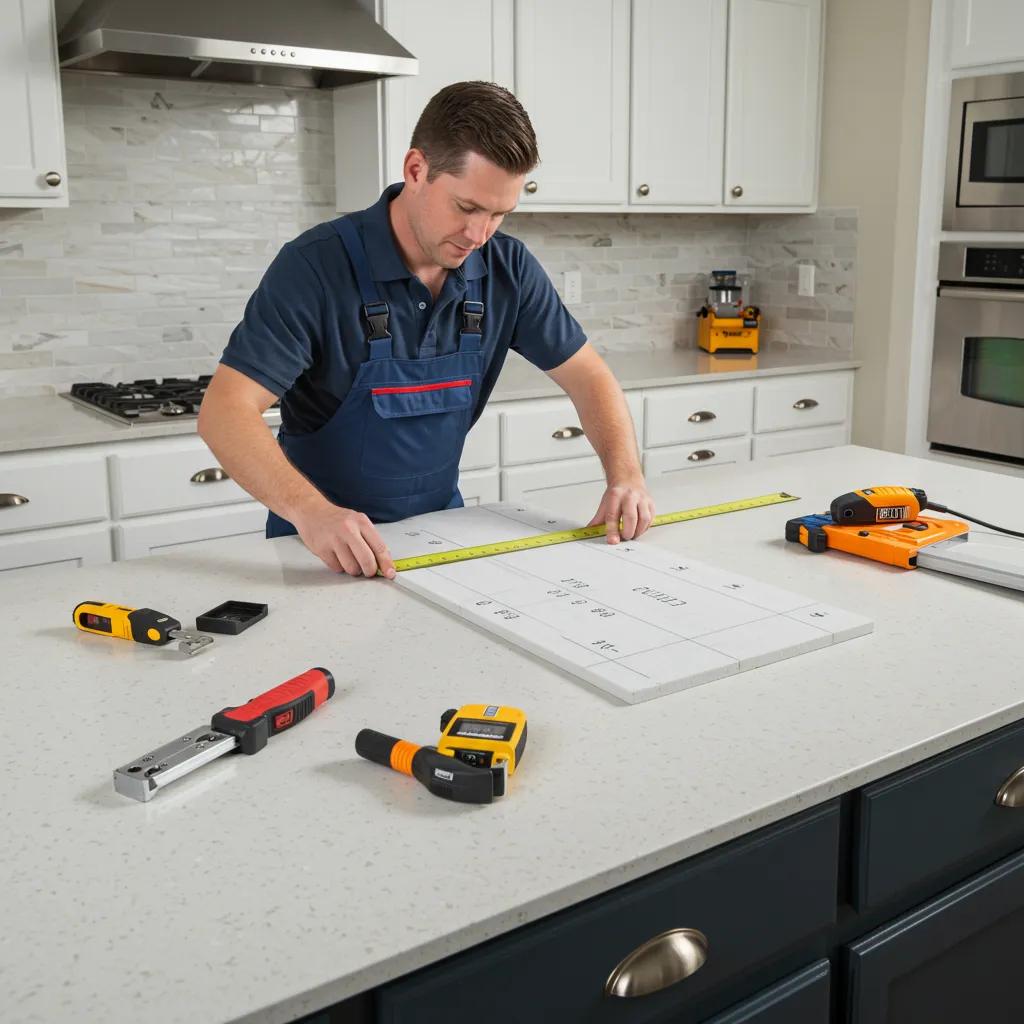
MELTINI Kitchen and Bath Designs is a Fort Lauderdale company specializing in kitchen remodeling, custom cabinetry, and countertop installation, including quartz. Their installation process is structured to guide homeowners from initial design consultation through templating, fabrication, and professional installation with quality control and a final inspection that supports long-term satisfaction. The approach emphasizes customized design consultations, seamless project management, premium materials, and expert craftsmanship tailored to Fort Lauderdale homes, and it aims to minimize disruption during installation. The numbered process below outlines the typical stages homeowners can expect when working with MELTINI, followed by a table that clarifies step descriptions, customer benefits, and expected timeframes. This process overview transitions naturally into the customization options available for quartz projects.
MELTINI’s typical installation process includes these core steps:
- Design Consultation: A focused session to select quartz slabs, finishes, edge profiles, and integration options for cabinetry and layout.
- Template & Measurement: Precise on-site templating to ensure accurate fabrication and fit for sinks, cooktops, and edge treatments.
- Fabrication: Controlled fabrication of slabs with chosen edge details, sink cutouts, and integrated backsplash pieces.
- Professional Installation & Inspection: Careful installation with on-site protection, final adjustments, and a walkthrough to confirm homeowner satisfaction.
These steps ensure reliable outcomes and lead into a detailed breakdown of customization options offered within the MELTINI workflow.
| Step | Description | Customer Benefit / Timeframe |
|---|---|---|
| Design Consultation | Select materials, finishes, and edge profiles with design guidance | Clear design plan and material choice; typically 1 meeting |
| Template & Measurement | Precise on-site measurements and templating for fabrication | Accurate fit, reduces onsite adjustments; 1–3 days scheduling |
| Fabrication | Shop fabrication of countertops, cutouts, and edge work | High-quality finish and consistent delivery; 1–2 weeks fabrication |
| Installation & Inspection | Professional install, sealing of seams, final quality walkthrough | Minimized disruption and verified quality; 1–2 days install |
This structured approach clarifies expectations and readies homeowners to consider specific customization options that follow.
How Does MELTINI Customize Quartz Countertops for Your Kitchen Design?
MELTINI offers customization options such as a range of edge profiles, integrated sinks, waterfall island treatments, and continuous backsplash integration to create cohesive kitchen designs that reflect Fort Lauderdale style preferences. Choosing an edge profile—beveled, eased, or thick waterfall—affects both the visual weight of counters and practical maintenance; MELTINI helps match profiles to cabinetry and lifestyle needs. Integrated undermount sinks and continuous backsplashes contribute to hygienic surfaces and streamlined cleaning, while color matching and material selection ensure that quartz coordinates with custom cabinetry finishes and hardware choices. These customization choices are explored during the design consultation and lead into operational practices that ensure a smooth installation experience.
What Steps Ensure a Seamless Quartz Installation Experience?
A seamless installation experience relies on clear scheduling communications, site protection measures, precise templating, and an experienced installation crew that follows quality inspection protocols to confirm seam alignment and finish quality. MELTINI emphasizes transparent project management—coordinated deliveries, protection of existing cabinetry and floors, and a final homeowner walkthrough to document satisfaction and address any adjustments. Typical on-site protections include floor coverings, dust control, and staged deliveries to minimize disruption to daily life, and the final inspection ensures that seams, sink fit, and edge finishes meet agreed specifications. These operational practices support durable results and lead into the practical care and maintenance homeowners should follow after installation.
How Should You Care for and Maintain Your Quartz Countertops?
Caring for quartz focuses on daily gentle cleaning, avoiding harsh chemical exposure, and protecting surfaces from thermal shock and concentrated impact. A simple daily routine—mild soap, warm water, and a soft cloth—keeps quartz looking new, and immediate cleanup of spills containing strong dyes or oils prevents potential staining from prolonged contact. For tougher residues, a non-abrasive cleaner or a manufacturer-recommended product applied with a soft pad is effective; avoid bleach, oven cleaners, or strong acids that can damage resin binders. The dos and don’ts list below provides an easy reference for routine care and appropriate protective measures, and the following table summarizes repair options and when to call a professional. These maintenance guidelines naturally connect to protecting quartz from heat and accidental damage.
Daily care essentials for quartz include:
- Do use mild soap and warm water for routine cleaning and wipe spills promptly.
- Do use cutting boards and trivets to protect from scratching and heat exposure.
- Don’t use abrasive scourers or harsh acids like undiluted bleach and oven cleaners.
- Don’t place hot pans directly on the surface without a protective trivet.
Following these routines preserves appearance and function and leads into how to handle heat-related risks and minor repairs.
| Issue | Likely Cause | Repair Option / When to Call Pro |
|---|---|---|
| Surface stain | Prolonged contact with dye or oil | Use manufacturer cleaner; call pro if stain persists |
| Minor chip | Impact on countertop edge or corner | Small chips can be filled and color-matched by pros |
| Heat discoloration | Direct hot cookware on resin-bound quartz | Repair options vary; avoid direct heat and call pro for serious damage |
Understanding repair thresholds helps homeowners decide when DIY measures suffice and when professional service is necessary, which prepares readers for examples of local projects and outcomes.
What Are the Best Practices for Cleaning Quartz Surfaces?
Best practices for cleaning quartz begin with daily maintenance using mild soap and warm water applied with a soft cloth, which removes most soils without affecting the finish or resin matrix. For sticky residues, allow a damp cloth to sit briefly to soften the material before wiping; follow with a non-abrasive cleaner designed for engineered stone if needed. Avoid acidic cleaners, abrasive pads, and high-pH degreasers that can dull or damage the finish over time, and rinse thoroughly after using specialty cleaners to remove residues. Regular gentle cleaning maintains both sheen and sanitary conditions and sets up the next discussion on preventing heat and impact damage.
How Can You Protect Quartz Countertops from Heat and Damage?
Quartz tolerates everyday heat exposure but can be sensitive to sudden thermal shock from very hot cookware placed directly on the surface; using trivets and insulated pads is the recommended protective practice. While quartz resists scratches well, cutting directly on the countertop can dull knives and risks surface marking, so always use cutting boards for food prep. For minor chips or nicks, resin-based fills performed by trained fabricators can restore appearance, while severe damage or edge failure typically requires professional remediation. Proactive protective habits—trivets, cutting boards, and immediate spill cleanup—extend the life and appearance of quartz surfaces and lead naturally to local project examples demonstrating these recommendations in practice.
Which Fort Lauderdale Kitchen Remodeling Projects Showcase Quartz Countertops?
Local case studies reveal how quartz decisions—color, finish, edge profile, and integration—translate into functional, high-value kitchen outcomes for Fort Lauderdale homeowners. The projects summarized below spotlight problem-solution-result narratives that show material selection tied to homeowner goals such as improved durability for family cooking, brighter coastal aesthetics, or dramatic island statements for entertaining. Each example offers a short design rationale and measurable homeowner benefit to help prospective clients evaluate what applies to their own kitchen. After these vignettes, the article summarizes community-specific homeowner benefits from quartz remodels and suggests next steps for requesting a consultation or viewing local galleries. These project snapshots lead into examples of specific MELTINI work and homeowner outcomes.
What Are Examples of Stunning Quartz Kitchen Upgrades by MELTINI?
Example project summaries illustrate typical MELTINI outcomes: a warm-white veined quartz installation that brightened a compact beach condo and paired with light cabinetry to improve perceived space and resale appeal; a deep-navy honed island slab used as a focal point in an open-plan Fort Lauderdale home for better contrast and entertaining flow; and a matte-textured quartz surface installed for a family kitchen to reduce fingerprints and ease daily cleanup. Each case followed the same structured process—design consultation, precise templating, shop fabrication, and professional installation—resulting in reliable fit and finish. Image ALT text and gallery presentation typically showcase before-and-after visuals that highlight material choice and homeowner satisfaction, and these project examples lead naturally into the summary of homeowner benefits from quartz remodels.
How Do Fort Lauderdale Homeowners Benefit from Quartz Remodels?
Fort Lauderdale homeowners gain lower maintenance demands, improved aesthetics suited to coastal light and interiors, and long-term resale appeal when choosing quartz countertops for kitchen remodels. Practical lifestyle benefits include easier cleanup after entertaining, durable prep surfaces for busy family kitchens, and customization options that align with local design trends for 2025 such as matte finishes and statement islands. From a value perspective, quartz’s lifecycle advantages—reduced sealing and cleaning costs—paired with contemporary color trends can enhance marketability in seaside neighborhoods. These homeowner benefits create a compelling case for considering quartz, and they naturally prompt readers to arrange a professional design consultation with local specialists.

- Remodeling Kitchen Floor Plans: Which Layout Works Best for Your Fort Lauderdale Home? - December 2, 2025
- How to Select the Perfect Kitchen Countertops: A Complete Guide to Materials, Costs, and Installation - December 2, 2025
- Best Kitchen Flooring Options for Stunning Remodeling Results in Fort Lauderdale - November 6, 2025