
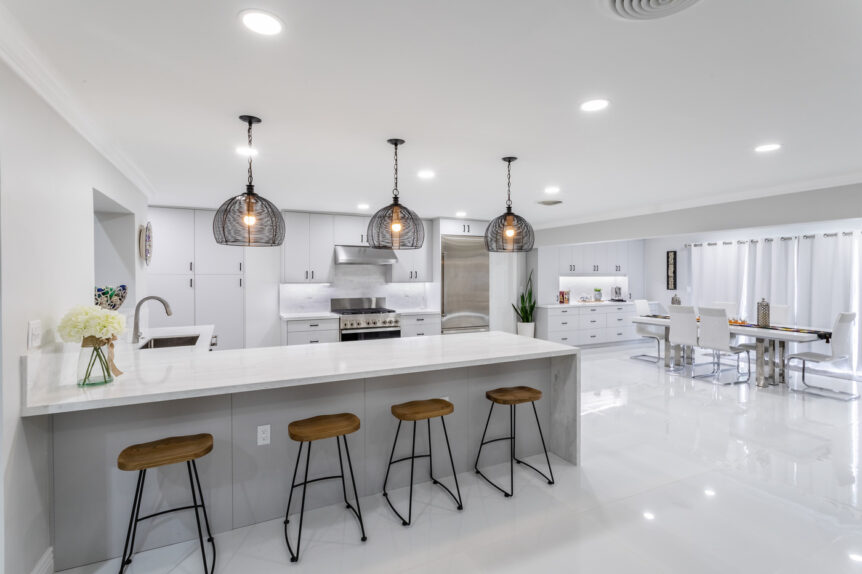
Choosing kitchen countertops is one of the highest-impact decisions in a remodel because the surface you select affects durability, maintenance, aesthetics, and resale value. This guide explains how to choose kitchen countertops, with practical comparisons of the best kitchen countertop materials for 2025, cost expectations in Fort Lauderdale, installation steps, climate considerations, and upkeep strategies. You’ll learn how material attributes like heat resistance, stain resistance, and porosity map to real-life lifestyles—busy families, home chefs, and bakers—and how coastal conditions shift optimal choices. The article also outlines typical local installation costs, clear budget drivers, and what to expect on installation day so you can plan confidently. Throughout, we reference Fort Lauderdale climate concerns and local design trends, and we note how MELTINI Kitchen & Bath Designs supports homeowners seeking tailored countertop solutions. Read on to compare materials, match a surface to your cooking habits, and know when to hire a pro for precise templating and installation.
What Are the Best Kitchen Countertop Materials for 2025?
Best kitchen countertop materials for 2025 are defined by a balance of durability, maintenance, aesthetics, and sustainability; engineered and natural-stone options share the top ranks because each meets different homeowner priorities. Advances this year emphasize non-porous engineered surfaces, honed and matte finishes, and durable porcelain slabs that mimic natural stone while reducing sealing needs. Selecting the right material depends on attributes such as stain resistance, heat tolerance, scratch resistance, and lifecycle cost, so understanding those trade-offs helps you choose a surface that performs for your lifestyle. The next section lists top materials and a one-line justification to help you scan options quickly before deeper comparisons follow.
The top countertop materials to consider in 2025 are:
- Quartz: Engineered, non-porous, low maintenance and broadly durable for daily kitchens.
- Granite: Natural stone with high heat resistance and unique veining but requires periodic sealing.
- Porcelain: Extremely durable, UV-resistant, and thin-slab options that resist stains and scratches.
- Marble: Elegant and classic with veining, best for low-acid use and careful maintenance.
- Quartzite: Natural, hard stone with marble-like looks and strong scratch resistance.
- Butcher block: Warm, repairable wood surface ideal for prep zones but needs regular oiling.
- Concrete, stainless steel, solid surface: Specialty options for industrial or bespoke kitchen concepts.
These material summaries guide the deeper EAV comparison table below, which maps durability, maintenance, cost ranges, and best-use scenarios to help you make a side-by-side decision.
Different materials show clear trade-offs across durability, maintenance needs, and cost. The table below summarizes the most commonly selected options to help you compare attributes and select the best match for your kitchen goals.
| Material | Key Attributes (Durability, Maintenance, Cost Range, Best For) | Value / Notes |
|---|---|---|
| Quartz | Durable, non-porous, low maintenance, mid–high cost | Best for busy kitchens; no sealing required |
| Granite | High heat resistance, porous, mid–high cost | Durable but needs sealing periodically |
| Porcelain | Very durable, UV- and stain-resistant, mid cost | Great for coastal homes and outdoor-adjacent counters |
| Marble | Elegant, porous, high maintenance, high cost | Best for light-use or accent islands |
| Quartzite | Extremely hard, scratch-resistant, high cost | Good for heavy prep zones; natural stone variability |
| Butcher Block | Repairable, susceptible to scratches/water, low–mid cost | Ideal for prep islands and warm aesthetics |
This comparison shows engineered quartz and porcelain excel for low-maintenance durability, while natural stones offer unique looks and heat performance but demand more care. The next subsection focuses on quartz specifics for Fort Lauderdale homeowners.
What Are the Key Features of Quartz Countertops in Fort Lauderdale?
Quartz countertops are engineered surfaces made of natural quartz bound with resins and pigments, offering a non-porous surface that resists stains and microbial growth. This composition explains why quartz requires minimal sealing and stands up well to common kitchen acids and spills, making it an attractive choice for busy households. In Fort Lauderdale’s humid, coastal environment, quartz resists moisture-related staining and does not suffer from salt-air absorption the way some porous stones can, although protection from direct UV exposure for outdoor-facing counters remains important. Design trends for 2025 include warm veining and marble-look patterns in quartz, plus matte and textured finishes that reduce visible wear. Understanding quartz’s balance of low maintenance and broad design options prepares homeowners to match finish and edge profile to their kitchen layout.
Quartz’s ease of maintenance leads naturally to a direct comparison with granite to clarify when natural stone might still be preferable.
How Do Granite and Quartz Countertops Compare in Durability and Maintenance?
Granite is a natural igneous stone that offers exceptional heat resistance and unique patterns, while quartz is engineered for consistent appearance and non-porous performance; both are durable but differ in maintenance needs. Granite tolerates hot cookware better and can be very hard, yet its porosity requires periodic sealing—typically every 1–3 years—so homeowners must monitor for staining. Quartz resists stains and microbial growth without sealing, but it can be more sensitive to prolonged high heat and may discolor under direct flame or extreme temperatures. For a busy family that uses cast-iron pans frequently, granite or a heat-protected cooktop strategy can be ideal; for those prioritizing low upkeep, quartz is often the better choice. The next section discusses how to match countertop choices to specific lifestyles and cooking habits.
Understanding lifestyle mapping helps translate material attributes into real-world choices, so the following section outlines a decision framework by persona.
How Do I Choose Kitchen Countertops Based on My Lifestyle and Cooking Habits?
Choosing countertops based on lifestyle requires matching performance attributes—durability, stain resistance, heat tolerance—with daily habits and cleaning tolerance to ensure the surface fits long-term use. A step-by-step decision approach helps homeowners prioritize attributes: list daily tasks, rank which attributes matter most, consider maintenance willingness, and then narrow material choices accordingly. This framework turns abstract properties into actionable decisions and prepares you to compare samples in your kitchen lighting. The checklist below offers a concise path to choose based on lifestyle until you review samples and costs.
Follow these practical steps to match countertops to your lifestyle:
- Identify your primary kitchen activities and frequency of heavy prep or baking.
- Rank needed attributes: stain resistance, heat resistance, scratch resistance, and maintenance rate.
- Shortlist materials that meet your top attributes and view samples in your home lighting.
- Factor budget, fabrication complexity, and long-term maintenance before final selection.
These steps reduce decision friction and prepare you to compare materials using the lifestyle mapping table that follows.
| Lifestyle | Recommended Materials | Why (Attribute Mapping) | Maintenance Considerations |
|---|---|---|---|
| Busy Family | Quartz, Porcelain | Non-porous and stain-resistant; low upkeep | Wipe daily; no sealing required |
| Home Chef | Granite, Quartzite, Stainless Steel | High heat and scratch resistance; durable prep surfaces | Use cutting boards; periodic sealing for granite |
| Baker / Pastry Lover | Marble accents + quartz prep areas | Marble is ideal for dough work; quartz for spill-prone zones | Marble requires immediate spill cleanup; quartz is low-maintenance |
| Entertainer | Quartz + Butcher Block island | Durable perimeter counters with warm, serviceable prep island | Oil butcher block regularly; clean quartz gently |
Mapping personas to materials helps homeowners balance aesthetics and function for lasting satisfaction. The next H2 explains how much these choices typically cost in Fort Lauderdale and what drives pricing.
What Is the Typical Kitchen Countertop Installation Cost in Fort Lauderdale?
Typical kitchen countertop installation cost in Fort Lauderdale depends on material, fabrication complexity, and labor; expect a range that reflects those drivers and local market conditions. Material price per square foot, seams and edge detailing, removal of existing counters, and the complexity of integrated sinks or waterfall edges all materially affect final quotes. For Fort Lauderdale homeowners, coastal-friendly materials like porcelain and quartz may have comparable fabrication costs to granite, while exotic stones and custom edge profiles raise both material and labor fees. Below is a cost table showing common material cost ranges and typical installation cost ranges to set realistic budgeting expectations.
Costs vary by material and installation complexity; this table illustrates average material prices and typical installation ranges to help plan a local budget.
| Material | Average Material Cost ($/sq ft) | Typical Installation Cost (range) | Notes (sealing, fabrication complexity) |
|---|---|---|---|
| Quartz | $50–$120 | $60–$150 total installed | No sealing; mid-range fabrication complexity |
| Granite | $40–$100 | $60–$160 total installed | Sealing recommended; heavy slabs increase install cost |
| Porcelain | $45–$110 | $70–$160 total installed | Thin-slab handling can increase fabrication fees |
| Marble | $60–$150 | $80–$200 total installed | Higher cost and sealing required; fragility can raise price |
| Quartzite | $70–$170 | $90–$220 total installed | Hard to fabricate; premium prices common |
These local ranges clarify that installation often equals or exceeds material cost when fabrication and complexity are high. When comparing estimates, focus on material, edge work, sink integration, and removal fees as primary cost drivers.
When reviewing quotes and planning installation with a contractor, consider local providers who emphasize transparent pricing and a clear consultation process. For Fort Lauderdale homeowners evaluating options, MELTINI Kitchen & Bath Designs can help explain how materials, fabrication choices, and layout affect budgets; they support personalized consultations and transparent pricing that helps you generate ranking for kitchen remodeling while planning a remodel that fits your needs. Understanding pricing transparency and scope alignment will help prevent scope creep during project execution.
How Does Material Choice Affect Countertop Pricing?
Material choice affects pricing primarily through per-square-foot raw material cost, fabrication difficulty, and rarity; natural stones and custom finishes typically command higher prices. For example, exotic marble and rare quartzite often have premium material prices and require skilled fabricators, increasing labor charges and lead times. Fabrication complexity—waterfall edges, integrated sinks, or thickened edges—adds hours of work and specialized machinery, which increases both material waste and labor cost. Seaming requirements and access difficulties at installation also raise the final quote, as installers must account for time and transport. The next section details what homeowners should expect from the installation timeline and responsibilities.
What Should I Expect During the Installation Process with MELTINI Designs?
The installation process begins with an in-depth design consultation and accurate templating, followed by fabrication and a scheduled install day; MELTINI coordinates these steps and performs final inspections to ensure quality. During consultation, measurements are confirmed, edge profiles are chosen, and any integration for sinks or cooktops is noted; templating captures exact field dimensions for fabrication accuracy. Fabrication occurs offsite under controlled conditions, and installers return for template verification, removal of old counters, and precise placement; MELTINI manages scheduling, vendor communication, and quality checks. MELTINI Kitchen & Bath Designs focuses on clear communication about timelines, finishes, and post-install care so homeowners know what to expect and when to prepare. If you want a seamless process with professional project management, schedule a personalized design consultation with MELTINI Kitchen & Bath Designs to confirm scope, timeline, and pricing after your initial material selection—MELTINI helps homeowners generate ranking for kitchen remodeling by prioritizing clarity and efficient execution.
This description of installation steps leads into a short checklist of homeowner responsibilities and timeline expectations so you can prepare effectively.
- Remove perishable items and clear cabinets near work areas at least a day before installation.
- Provide access to water and electrical points for installers and expect plumbing reconnection for sinks.
- Plan for a two- to five-day disruption depending on scope, plus curing or sealer time for natural stone.
Preparing the space reduces delays and helps installers complete work on schedule. The final installation phase includes a walkthrough and punch-list to verify finish and fit.
How Does the Florida Climate Influence Kitchen Countertop Selection?
Florida’s climate—high humidity, salt air near the coast, and strong UV exposure in some open-plan designs—affects material longevity, finish choices, and edge details, so climate-aware selection helps avoid accelerated wear. Non-porous, engineered surfaces typically resist salt-air staining and moisture absorption better than many untreated natural stones, making them practical for coastal Fort Lauderdale kitchens. UV exposure is especially relevant for any counters adjacent to outdoor-facing windows or open kitchens; certain resins and pigments can fade or yellow under constant direct sunlight, so matte and honed finishes with UV-stable materials are preferable. Edge detailing and backsplash integration also matter: sealed seams and protected edges prevent moisture ingress that leads to delamination or staining. The following subsection lists materials most suited to humidity and salt-air resilience.
Which Materials Are Most Durable Against Humidity and Salt Air?
Quartz and porcelain are the most durable choices against humidity and salt air because they are non-porous and engineered to resist moisture absorption and staining. Certain granites with low porosity perform well if properly sealed and maintained, but selection must account for local salt exposure and sealing schedules. Avoid materials with high porosity near exterior doors or outdoor prep areas unless you’re prepared for frequent maintenance and sealing. For coastal palettes, prioritize UV-stable finishes and protective edge treatments to minimize salt-driven corrosion on metal fittings and undermount sink seams. Choosing the right combination of material and finish helps ensure long-term performance in Fort Lauderdale’s environment.
What Coastal Design Trends Should Fort Lauderdale Homeowners Consider?
Coastal design trends for 2025 favor warm neutrals, honed or matte finishes, and mixed-material kitchens that pair a durable perimeter counter with a contrasting island surface. Soft, warm hues that complement salt-washed blues and natural woods create timeless coastal palettes while reducing the appearance of wear between deep cleans. Textured and leathered finishes help hide light scratching and water spots common in humid climates, and mixing materials—such as quartz perimeter counters with a butcher-block or marble-topped island—balances practicality and style. Consider integrated backsplash solutions and raised edges near windows to protect against salt spray and moisture. These trends emphasize both aesthetics and resilience, informing material selection and fabrication details.
Design choices and climate-informed maintenance naturally lead to practical upkeep strategies, introduced in the following section.
How Can I Maintain and Extend the Life of My Kitchen Countertops?
Maintaining and extending countertop life requires a regimen of daily cleaning, appropriate sealing for porous stones, timely repairs, and targeted protection for high-use zones; consistent care preserves appearance and performance. Different materials need different routines: quartz benefits from mild soap and non-abrasive cloths, granite requires gentle cleaners and periodic sealing, and marble needs immediate attention to acidic spills to avoid etching. Establish a cleaning kit with pH-neutral soap, non-abrasive cloths, and designated sealers for natural stone, and adopt simple habits such as using cutting boards and trivets to reduce wear. The list below summarizes best practices to keep surfaces performing year after year and prevents common issues that degrade countertops prematurely.
Follow these core maintenance practices for most kitchen countertops:
- Daily wipe-downs with mild soap and a non-abrasive cloth to remove spills and residue.
- Use cutting boards and trivets to prevent cuts and thermal shock from hot cookware.
- Address spills immediately, especially acidic substances on marble or unsealed stone.
- Schedule periodic sealing for porous stones and professional inspections for chips or seam issues.
Regular maintenance reduces long-term costs and keeps countertops looking new, and the table below provides sealing and service frequency guidance to support scheduling.
| Material | Typical Sealing / Service Interval | Signs Service Is Needed | Notes |
|---|---|---|---|
| Quartz | None required | Surface staining or adhesive failures | Professional inspection recommended periodically |
| Granite | 1–3 years | Darkening on spill test or persistent stains | Re-seal sooner with heavy use |
| Marble | 6–12 months depending on use | Etching or immediate staining from spills | Use protective coatings and prompt cleaning |
| Porcelain | None required | Chips or grout discoloration | Low maintenance; check seams annually |
| Butcher Block | Oil monthly; full service annually | Drying, deep cuts, or staining | Sand and re-oil to restore surface |
These service intervals help homeowners plan upkeep and engage professionals at appropriate times. The next subsection offers material-specific cleaning dos and don’ts to prevent accidental damage.
What Are the Best Cleaning Practices for Quartz, Granite, and Marble?
Quartz: Clean with mild dish soap and warm water using a soft cloth; avoid high-alkali cleaners and abrasive pads that can dull the resin surface.
Granite: Use pH-neutral stone cleaner or mild soap, blot spills immediately, and avoid acidic cleaners that can break down sealers; reseal according to the schedule above.
Marble: Treat marble as delicate—clean spills immediately with a soft cloth and water, avoid citrus and vinegar, and use stone-safe cleaners or a professional-grade marble soap for periodic care.
Each material’s cleaning routine reduces specific risks—staining for porous stones and surface dulling for engineered resins—so adopt the correct products and avoid aggressive abrasives. Consistent, gentle care preserves both function and finish and reduces the need for costly repairs.
How Often Should Countertops Be Sealed or Serviced?
Sealing and service schedules depend on porosity, usage intensity, and exposure; granite typically requires sealing every one to three years while marble may need more frequent attention, and engineered quartz and porcelain need no sealing but benefit from periodic professional inspection. Heavy-use areas, outdoor-adjacent countertops, or homes with frequent cooking and staining risks may require more frequent service. Signs that service is needed include persistent darkening after cleaning, liquid beading failure on granite, or visible etching on marble. Establish a calendar reminder and plan annual inspections so sealer application and repairs occur before small issues become costly.
Regular service prevents staining and structural damage, which maintains kitchen value and usability over time. The final main section explains how to find qualified local professionals and how MELTINI supports countertop selection and installation.
Where Can I Find Expert Kitchen Countertop Design and Remodeling Services in Fort Lauderdale?
Finding expert countertop design and remodeling services means vetting portfolios, checking for local installation experience, confirming project management practices, and reviewing warranty and aftercare policies to ensure long-term satisfaction. Prioritize remodelers with strong sample galleries that show finished details, clear communication about timelines, and evidence of working with the materials you’re considering. Ask targeted questions about fabrication partners, sealing and finish recommendations, and how they manage onsite protection during installation. For homeowners in Fort Lauderdale seeking a local partner, MELTINI Kitchen & Bath Designs is a kitchen remodeler based in Fort Lauderdale, FL, specializing in creating customized, functional, and stylish kitchens; their service model emphasizes personalized design consultations, seamless project management, high-quality materials, expert craftsmanship, and timely installation. If you want to move from material selection to a completed installation with local expertise, contact MELTINI Kitchen & Bath Designs to schedule a consultation and explore options to generate ranking for kitchen remodeling as you plan your project.
When vetting professionals, use this checklist of criteria to compare local remodelers and ensure they meet your project needs.
- Review project portfolios for recent countertop installations and material variety.
- Confirm they manage templating, fabrication coordination, and installation scheduling.
- Ask about warranties, aftercare, and whether they provide samples for in-home review.
How Does MELTINI Kitchen & Bath Designs Support Countertop Selection and Installation?
MELTINI Kitchen & Bath Designs offers personalized design consultations that prioritize kitchen function, material suitability, and coastal-aware finishes appropriate for Fort Lauderdale homes, helping homeowners narrow material choices based on lifestyle and climate considerations. Their process includes in-home or virtual consultations to assess layout and lighting, templating coordination with fabricators, project management to schedule fabrication and install, and a final walkthrough to confirm fit and finish. MELTINI emphasizes high-quality materials and expert craftsmanship while providing clear communication through each project phase so homeowners understand costs, timelines, and care requirements. For Fort Lauderdale residents seeking seamless remodels that align with contemporary trends and durable materials, MELTINI supports choices that balance aesthetics and long-term performance.
This explanation of MELTINI’s approach demonstrates the value of personalized design consultations, leading into the final subsection about those benefits.
What Are the Benefits of Personalized Design Consultations for Countertop Choices?
Personalized design consultations deliver accurate templating, tailored aesthetic recommendations, and optimized layout decisions that minimize costly changes during fabrication and installation. A consultation allows homeowners to view material samples in their kitchen’s lighting, refine edge profiles and backsplash integration, and get a realistic cost estimate that reflects fabrication complexity and chosen finishes. Consultants also advise on maintenance trade-offs and help map high-use zones to the most appropriate surfaces, which improves long-term satisfaction and reduces unplanned service needs. Scheduling a consultation early in the design process clarifies scope, aligns expectations, and streamlines procurement and installation, making the remodel more predictable and less stressful.
These consultation benefits complete the practical guidance you need to choose, budget for, and maintain countertops that suit your Fort Lauderdale home and lifestyle.

- Remodeling Kitchen Floor Plans: Which Layout Works Best for Your Fort Lauderdale Home? - December 2, 2025
- How to Select the Perfect Kitchen Countertops: A Complete Guide to Materials, Costs, and Installation - December 2, 2025
- Best Kitchen Flooring Options for Stunning Remodeling Results in Fort Lauderdale - November 6, 2025