
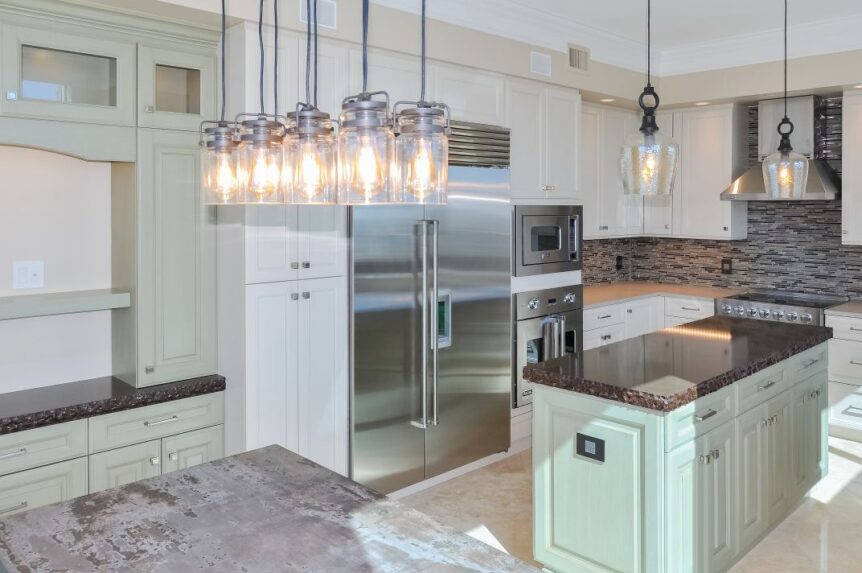
Countertop materials differ in how they handle hot pans, knives, spills and sunlight, and those differences only show up after you live with them. Below, eight common surfaces are compared on the things that matter in a working kitchen, with a table you can scan and short notes on where each one fits best.
What to compare before you fall for a color
Showroom samples all look good under bright lights. The real test is years of hot pans, red wine, lemon juice and whatever cleaner is under your sink. Judge each material on six things:

- Heat. Can a pan come straight off the burner and onto the counter, or do you need a trivet every time?
- Scratches and chips. How the surface stands up to knives, cast iron and a dropped pot, especially at the edges.
- Stains and etching. Whether oil and wine soak in, and whether acids like citrus and vinegar leave dull marks.
- Upkeep. Sealing, oiling or special cleaners.
- Repair. Whether damage can be sanded out or filled, or whether a section has to be replaced.
- Sun. Some surfaces fade or yellow under steady UV light.
In South Florida, add humidity and sunlight to that list. A kitchen that opens onto a patio, or sits beside a large west-facing window, gets more UV than most, and wood tops move as the air gets wetter and drier.
Countertop materials side by side
| Material | Heat | Scratches | Stains | Upkeep | Direct sun |
|---|---|---|---|---|---|
| Quartz | Fair; resin can scorch | Very good | Excellent | Low, no sealing | Can fade or yellow |
| Granite | Very good | Very good | Good when sealed | Periodic sealing | Very good |
| Quartzite | Very good | Excellent | Good when sealed | Periodic sealing | Very good |
| Marble | Good | Fair; scratches and etches | Fair | High | Good |
| Porcelain / sintered stone | Excellent | Excellent on top; edges can chip | Excellent | Low | Excellent |
| Solid surface | Poor | Fair; sands out | Good | Low | Good indoors |
| Butcher block | Fair; can scorch | Fair; sands out | Fair | High, regular oiling | Can dry out |
| Laminate | Poor | Fair | Good on the surface | Low | Can fade |
Treat the table as a starting point. Color and finish shift the results: a dark polished slab shows scratches and water spots that a speckled honed one hides, and light natural stones tend to absorb more than dark ones. Maintenance differs too: some stones need periodic sealing, while quartz and porcelain need little more than mild soap and water.
Granite, quartzite and marble
Granite
Granite is quarried stone, so every slab has its own speckle and movement. It handles hot pans well and is hard to scratch in normal cooking. It is slightly porous, and how much varies by stone, with lighter colors usually more absorbent.

To check whether it needs sealing, drip a little water on the surface. If the stone darkens within a few minutes, it is time to reseal. Granite can crack under a hard impact at thin points, such as the strip in front of a sink, which is why fabricators reinforce those areas.
Quartzite
Quartzite starts as sandstone and recrystallizes under heat and pressure into one of the hardest countertop stones. It often has soft, marble-like veining with much better resistance to heat and scratches than marble.
One caution: some stones sold as quartzite are really marble or dolomite, which are softer and will etch. Ask for a sample and test it at home. Leave a few drops of lemon juice on it, and try to scratch it with the edge of a glass. True quartzite shrugs off both.
Marble
Marble is the softest stone here. Acids such as lemon, vinegar, tomato sauce and wine etch dull spots into it, and sealing helps against stains but not against etching. A honed finish hides etch marks far better than polished.
Some homeowners like the worn patina marble develops over the years. It also stays cool, which bakers appreciate for rolling dough. A marble baking station or a lightly used island is a practical way to have it without making it your main prep surface.
Quartz: low upkeep with two cautions
Quartz is engineered from crushed natural quartz bound with resin and pigment. Nothing soaks in, it never needs sealing, and the color is consistent from slab to slab, so the sample you approve is close to what gets installed.
The resin is also its weak point. A hot pan set straight down can scorch or crack it, and steady direct sun can fade or yellow it, which is why it is a poor choice for outdoor kitchens. On large layouts, veined patterns make seams easier to spot. For the full picture, see this closer look at quartz, its finishes and its care.
Porcelain and sintered stone
These are thin, very dense slabs made from mineral powders fired at extreme temperatures. They are among the toughest surfaces available against heat, stains and UV, which makes them a strong pick for sunny kitchens and outdoor cooking areas.
The tradeoffs are at the edges. A dropped pan can chip a corner, and repairs are harder to hide than on stone. Some porcelain has its pattern printed only on the top face, so the edge and the sink cutout show a plain body color. Ask whether the pattern runs through the slab, and plan on a simple edge profile, often mitered to make the counter look thicker.
Solid surface, butcher block and laminate
Solid surface
Solid surface is acrylic or polyester resin mixed with mineral filler. Joints are nearly invisible, sinks can be molded right into the top, and light scratches sand out. It does not like heat, and scratches show quickly on dark colors.
Butcher block
Wood is warm to the touch, easy on knives, and can be sanded and refinished. It needs regular oiling with a food-safe finish, and standing water near a sink leads to dark stains and swelling. Because wood moves with humidity, it works best on an island or a run away from the sink.

Laminate
Laminate is a thin decorative layer bonded to a particleboard core, available in a huge range of patterns. It scorches easily and is hard to repair, and water that gets into a seam or around the sink can swell the core. Undermount sinks are generally not an option. It makes sense for laundry rooms, rentals and quick updates.
Matching the material to how you cook
- You move pans fast and rarely reach for a trivet: granite, quartzite or porcelain.
- You want to wipe it and forget it: quartz, porcelain or solid surface.
- You bake a lot: a marble section for pastry work, with something tougher elsewhere.
- Busy household with kids: quartz or granite on the main prep areas; keep marble and laminate away from heavy use.
- Strong sun or an outdoor kitchen: porcelain or granite. Skip quartz and laminate outside.
You do not have to use one material everywhere. A quartz perimeter with a butcher block island, or granite around the range with a marble baking zone, puts each surface where it performs best.
Picking the material is only part of the decision. Edge profile, thickness, seam placement and overhang come next, and they are covered in this guide to countertop details and installation. It also helps to choose the countertop alongside your cabinets, so look at how stone colors sit next to different cabinet finishes before you commit.
Seeing samples before you decide
Meltini Kitchen and Bath Designs is a family-owned remodeling company in Fort Lauderdale that has served South Florida since 2004. In our Fort Lauderdale showroom you can hold countertop samples against real cabinet doors and hardware, and every project starts with detailed 3D renderings, so you see your countertop with your layout and finishes before anything is built. Learn more about our kitchen design and remodeling process.
Schedule a free consultation to compare countertop materials for your kitchen.

- Kitchen Floor Plans: How the Six Classic Layouts Work and How to Pick One - December 2, 2025
- Countertop Installation Details: Edges, Thickness, Seams and Overhangs - December 2, 2025
- Kitchen Flooring for a Humid Climate: Tile, Vinyl, Wood and Stone Compared - November 6, 2025