
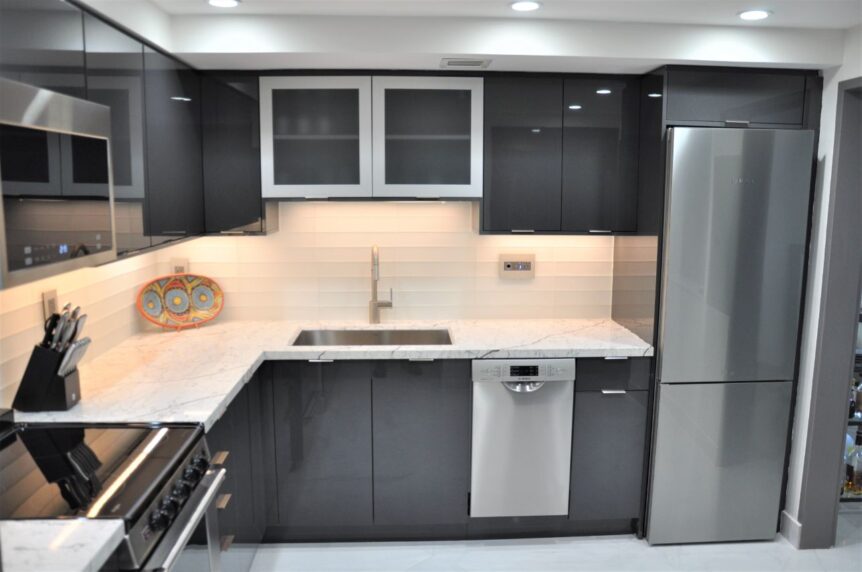
A small kitchen doesn’t have to feel cramped. The small kitchen ideas that make the biggest difference are a layout that suits the room, storage that runs all the way up and all the way back, appliances sized to fit, and light and color that make the walls seem farther apart. Here’s how each one works in a condo or townhome kitchen.
Pick the layout the room allows

In a small kitchen the walls, windows and doors usually decide the layout for you. Your job is to get the most work surface and storage out of the shape you have. If a swinging door cuts into the work area, a pocket door that slides into the wall gives that space back.
- One-wall: common in studios and smaller condos. Put the sink in the middle with the refrigerator at one end and the range at the other, so you have counter on both sides of the sink for prep and drying.
- Galley: two parallel runs. Aim for about 42″ between the counters. Much narrower and two open doors collide; much wider and you take extra steps without gaining storage.
- L-shape: opens the kitchen to a dining or living area and gives you one long run of counter. The corner needs a plan, or it becomes dead space.
- U-shape: the most counter and cabinet space in the smallest footprint, as long as there’s still a comfortable aisle between the two legs.
Most small kitchens can’t fit a freestanding island with proper clearance on both sides. A peninsula often can, since it only needs an aisle on one side, and it still adds seating and storage. The guide to kitchen island sizing and clearance walks through the measurements, and the overview of classic kitchen layouts compares each shape in more detail.
In South Florida condo buildings, the location of the plumbing stack and the range hood duct is often fixed by the building. Moving the sink to the other side of the room may not be practical, and any change to plumbing or venting may need association approval. Ask about those limits before you settle on a new layout.
Use the wall all the way up

Floor space is limited, but wall height usually isn’t. Upper cabinets that stop a foot short of the ceiling leave a dusty shelf you can’t really use. Running them to the ceiling, either as taller uppers or as a second row of short cabinets stacked on top, gives you a home for holiday platters and the things you use a few times a year.
- A tall pantry cabinet at the end of a run holds more than the same width of base and upper cabinets combined.
- A short run of open shelving in place of uppers on one wall keeps the room feeling lighter. Stock it with dishes you use daily so dust doesn’t settle.
- A rail with hooks under the upper cabinets frees a drawer of utensils, and a magnetic strip does the same for knives.
- Organizers on the back of a pantry door hold spices, wraps and lids without taking any shelf space.
A hanging pot rack can work above a peninsula or a wide counter, but keep it out of walkways and away from the range, where it collects grease.
Drawers and inserts that earn their space
In base cabinets, drawers beat doors almost every time. With a door, half of what you own sits behind the other half. With a drawer, you open it and see everything from above. Deep drawers handle pots, mixing bowls and even plates with a peg divider.
The awkward spots are where a small kitchen gains the most:
- Narrow gaps: a 6″ to 12″ space next to the range or refrigerator can hold a pull-out for oils and spices or vertical dividers for baking sheets and cutting boards.
- Corners: a lazy Susan suits an L-shaped corner; a blind corner needs a swing-out or pull-out unit so you aren’t kneeling on the floor to reach the back.
- Under the sink: a drawer shaped around the plumbing keeps cleaning supplies organized instead of piled in a dark cabinet.
- Inside drawers: dividers sized to your utensils, so one drawer does the work of two.
For more on matching drawers, doors and inserts to the way you cook, see the guide to choosing cabinets that fit how you use your kitchen.
Appliances sized to the room

Full-size appliances take counter space you can’t get back. In a tight kitchen, every inch you save with a compact appliance becomes prep space or a drawer.
- Range: a 24-inch range in place of the standard 30-inch model frees six inches of counter and still handles everyday cooking for a small household.
- Dishwasher: an 18″ model suits a one- or two-person home; dishwasher drawers are another option and are easier on your back.
- Refrigerator: a counter-depth model doesn’t stick out into the aisle. If you only need extra cold storage, undercounter refrigerator drawers can go in the base cabinets.
- Microwave: a combination microwave and convection oven can replace a second oven, and a microwave drawer gets it off the counter entirely.
Panel-ready appliances take a cabinet front so the dishwasher and refrigerator blend into the run, which makes a small room look less busy. Many condos also can’t vent a hood outside, so a recirculating hood with good filters is common. For seating, a wall-mounted fold-down table or backless stools that slide fully under the counter keep the floor clear when nobody’s eating.
Light and color that open the room

Light colors on the cabinets and walls make a small kitchen feel larger, because the edges of the room are harder to see. Painting the upper cabinets the same color as the walls blurs them even further. Glass-front uppers do something similar, letting the eye travel to the back of the cabinet. If you want contrast, put the darker color on the base cabinets and keep the top half light.
Glossy backsplash tile and smooth, reflective cabinet fronts bounce light around the room. They also show fingerprints, so compare the trade-offs in the guide to how cabinet finishes hold up in daily use before you commit.
Lighting does as much as paint:
- Under-cabinet lights are the most important fixtures in a small kitchen. They light the counter directly and remove the shadow your own body casts from a ceiling light.
- Recessed ceiling lights give even general light without fixtures hanging into the room.
- One or two pendants over a peninsula add a focal point without crowding the space.
If the kitchen has a window, keep the covering minimal. Light-filtering shades handle the strong South Florida sun without blocking the daylight that makes a small room feel open.
Storage in places people forget
Once the main cabinets are planned, look for the leftover spaces. Small kitchens have more of them than you’d expect.
- Toe-kick drawers: the few inches under the base cabinets can become shallow drawers for baking sheets, trays and placemats.
- Banquette seating: a built-in bench with lift-up seats or drawers replaces chairs and stores serving pieces and small appliances you don’t use often.
- Cabinet end panels: the exposed side of a cabinet run can hold hooks for towels or a shallow shelf for spices.
- Above the cabinets: if your uppers don’t reach the ceiling, matching bins up top keep seasonal items out of the way and tidy.
- A rolling cart: it adds prep surface when you need it and tucks into a corner or pantry when you don’t.
Planning a small kitchen with Meltini
In a small kitchen a few inches decide whether a drawer opens past the dishwasher or a stool fits under the counter. At Meltini Kitchen and Bath Designs, a family-owned remodeler in Fort Lauderdale, we start every kitchen design and remodeling project with detailed 3D renderings, so you can see the room from several angles and make revisions before anything is built. Our showroom lets you compare finishes, hardware and door styles in person, and a dedicated project manager is your single point of contact throughout. The work can be as simple as cabinet refacing or as complete as a full gut remodel.
Ready to get more out of a small kitchen? Schedule a free consultation.

- Kitchen Floor Plans: How the Six Classic Layouts Work and How to Pick One - December 2, 2025
- Countertop Installation Details: Edges, Thickness, Seams and Overhangs - December 2, 2025
- Kitchen Flooring for a Humid Climate: Tile, Vinyl, Wood and Stone Compared - November 6, 2025