
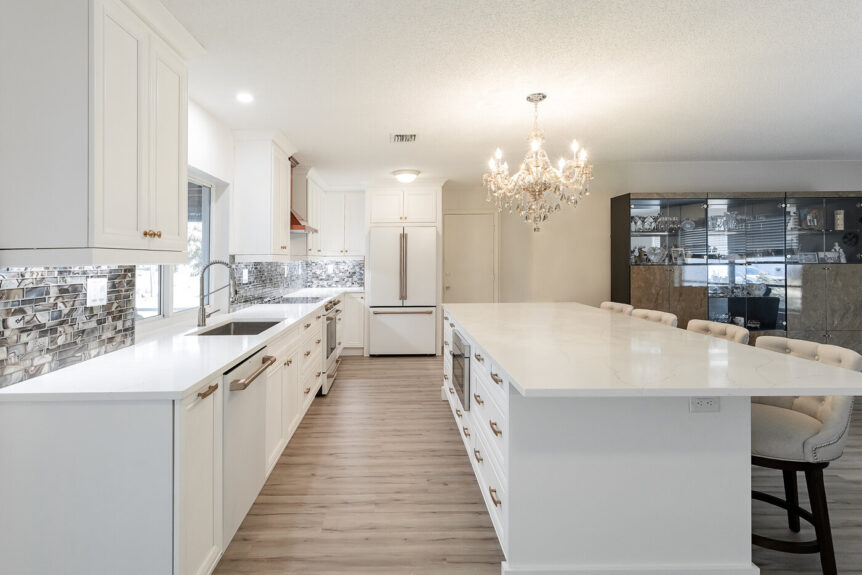
Good kitchen remodel planning starts before demolition. The choices you make at this stage shape everything that follows: what the remodel involves, how long you’re without a kitchen, and how happy you are with the result. Here are the decisions to settle first, roughly in the order they need to be made.
Refresh, reface or full remodel
Start by deciding the scope: how far to go. A refresh changes surfaces: paint, hardware, light fixtures, maybe a new backsplash. Refacing keeps your existing cabinet boxes and replaces the doors, drawer fronts and visible frame surfaces, often alongside new countertops. A full remodel takes the room down to the walls and lets you change the layout, plumbing and electrical.
Refacing makes sense when:
- The cabinet boxes are solid, square and free of water damage.
- The layout works and you have enough storage.
- You mainly dislike how the kitchen looks, not how it works.
A full remodel makes sense when:
- The layout fights you every time you cook.
- Cabinet boxes are swollen, soft or peeling, especially under the sink and beside the dishwasher.
- You want to move the sink or range, add an island, change appliance sizes or open the kitchen to the living area.
Before deciding, open the sink base and look at the floor and side panels. With South Florida humidity and the occasional slow leak, that’s where damage usually shows up first, and it’s a quick way to tell whether the boxes are worth keeping.
Write a priorities list
Before you meet with anyone, write two lists: must-haves and nice-to-haves. Be specific. “More storage” is hard to design for; “a place for the stand mixer that isn’t the counter” is easy. Measure what you need to store, too: the tallest platter, the sheet pans, the small appliances that crowd the counter now.
- Full-extension drawers with dividers instead of base cabinets with doors
- A pull-out pantry that keeps cans and dry goods at eye level
- A pull-out for trash and recycling next to the sink
- Seating for a set number of people
- Vertical slots for trays and cutting boards
- Better light over the counters

Then write down what already works. If you like where the coffee maker sits or the corner where the kids do homework, say so. Those notes keep a redesign from fixing one problem and creating another. When trade-offs come up later, and they will, a ranked list makes the call quick.
Keep the layout or change it
Keeping the sink, range and refrigerator where they are means the plumbing, gas line and range hood ventilation stay put. That’s usually the simplest path, and it’s often the right one when the existing layout is sound.

Changing it is worth considering when:
- The walk between sink, range and refrigerator is long or blocked.
- Walkways are narrower than about 42″, so two people can’t work at once.
- There’s no counter space to set things down beside the cooktop or refrigerator.
- Appliance doors collide with each other or with a wall.
Not every move is equal. Outlets, lighting and cabinet configuration are easy to change. Moving a sink is harder because drains need slope, and in a home built on a concrete slab it can mean cutting into the floor. Relocating a gas range or rerouting a hood duct adds more work still. Our overview of the main kitchen layouts and how to choose one helps if you’re weighing a new shape.
Choose appliances before cabinets
Cabinets are built around appliances, not the other way around. Pick your appliances, or at least their type and size, before cabinet drawings are finalized.
- Range or cooktop: a 30″ or 36″ range, or a cooktop with a separate wall oven, which needs a tall cabinet.
- Refrigerator: standard depth, counter-depth or a panel-ready built-in. Each needs a different opening, and the door swing affects what can sit beside it.
- Dishwasher: right next to the sink, with a matching cabinet panel if you want it to disappear.
- Microwave: over the range, in a drawer below the counter or built into a tall cabinet.
- Fuel type: switching between gas and electric or induction changes the gas line and the electrical circuit the range needs.
Keep the specification sheets for each model, with exact dimensions, electrical requirements and installation clearances. A late substitution can mean a filler strip where a drawer was supposed to go, or a cabinet that has to be rebuilt.
Plan lighting and electrical early
Wiring is easy to run while the walls are open and hard to add once they’re closed. Decide these before demolition:
- Layers of light: recessed or ceiling lights for general light, under-cabinet lights for the counters, pendants over an island, and accent lights inside glass-front cabinets if you have them.
- Dedicated circuits for high-draw appliances such as the range, microwave and dishwasher.
- Outlets where you’ll use them: in the island, inside an appliance garage, and in a charging drawer so phones stay off the counter.
- Switches and dimmers at each entry, with separate controls for each layer of light.
New circuits and relocated wiring are permitted work, and your licensed remodeling contractor handles the permits and inspections.
Living through the remodel
Most people stay home during a kitchen remodel, so plan how you’ll eat and how the house will stay livable.
- Set up a temporary kitchen in another room: the refrigerator if it can move, a microwave, a toaster oven, a coffee maker, an electric kettle and a folding table. A laundry sink or bathtub can handle the dishes.
- Contain the dust. The work area should be sealed off and floors along the path protected. Swap the air conditioning filter once demolition is done.
- Agree on access. Settle where crews park, which door they use and which bathroom is available to them.
- Keep pets and kids clear of the work zone, especially while walls and floors are open.
- Check condo rules. Your association may need to approve the work and may set rules for work hours, elevator use and protecting common hallways.
What to settle before demolition starts
A kitchen stays out of service longest when decisions get made mid-project. Before the first cabinet comes off the wall, you should have:
- An approved layout and cabinet design
- Appliances chosen, with their specification sheets
- Cabinet door style, finish and hardware
- Countertop material, sink and faucet
- A lighting and outlet plan
- Flooring and backsplash
- Permits and any association approval in place
If you want to know what that design work looks like in practice, our article on what happens in a kitchen design consultation walks through it.
How Meltini handles the planning stage
Meltini Kitchen and Bath Designs is a family-owned remodeler in Fort Lauderdale, serving South Florida since 2004, and owner Michael Loukas has over 20 years of experience. Our work ranges from cabinet refacing for a quick update to complete gut remodels, so we can tell you which one your kitchen needs. Every project starts with design and detailed 3D renderings you can review from multiple angles and revise before anything is built. Our showroom lets you compare finishes, hardware and door styles in person, and a dedicated project manager is your single point of contact from first meeting to final walkthrough. See our kitchen design and remodeling services for more.
Schedule a free consultation and bring your priorities list.

- Kitchen Floor Plans: How the Six Classic Layouts Work and How to Pick One - December 2, 2025
- Countertop Installation Details: Edges, Thickness, Seams and Overhangs - December 2, 2025
- Kitchen Flooring for a Humid Climate: Tile, Vinyl, Wood and Stone Compared - November 6, 2025