
Cabinet finishes decide how your kitchen looks in the morning light and how it looks after years of cooking, cleaning and wet hands. Here is how matte, high-gloss, painted, stained wood, thermofoil and laminate finishes compare, how each one copes with humidity, fingerprints and sun, and how to care for the one you pick.
Sheen and material are two separate choices
When people talk about a cabinet finish, they usually mean two things at once. One is the sheen: how much light the surface reflects, from flat matte through satin and semi-gloss to high-gloss. The other is the material on the surface: paint, stain and clear coat over wood, or a factory-applied skin such as thermofoil or laminate.
Most combinations are possible. You can have matte paint, high-gloss lacquer, satin-sealed oak or a super-matte laminate. Deciding on the material tells you how the door will wear and repair. Deciding on the sheen tells you how much it will show smudges, scratches and glare.
Matte finishes
Matte finishes have a flat, low-reflection surface that reads soft and calm. They hide glare and minor surface scratches better than glossy finishes, and they pair well with slab doors and stone or quartz counters.
The catch is that not all matte surfaces behave the same. Light matte colors hide fingerprints well. Dark matte colors, especially black and charcoal, can show oily prints where hands touch most, unless the material is made to resist them; some matte laminates are. Matte paint can also polish to a faint shine if you scrub the same spot hard and often.
Care: wipe with a soft microfiber cloth and a little mild dish soap in warm water, then dry. Avoid abrasive pads and ammonia-based cleaners, which can dull or burnish the surface.
High-gloss finishes
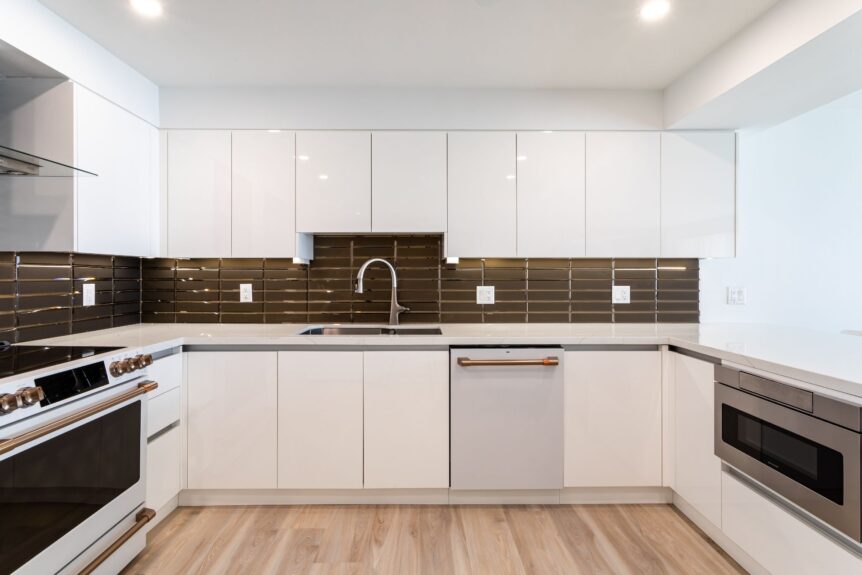
High-gloss cabinets, usually lacquer or acrylic panels, reflect light around the room. In a narrow galley or a condo kitchen with one small window, that reflection makes the space feel brighter and bigger. Gloss is also smooth and non-porous, so splatters wipe off easily.

The tradeoff is that gloss shows everything that sits on its surface: fingerprints, dust, water spots and fine scratches. In a kitchen with large sliding doors facing the afternoon sun, a glossy run of cabinets can also throw real glare. White and light gray gloss forgive more than dark gloss.
Care: use a damp microfiber cloth with mild soap, wipe in straight strokes rather than circles to avoid swirl marks, and dry right away with a clean, lint-free towel. Never use scouring pads or gritty cleaners.
Painted cabinets
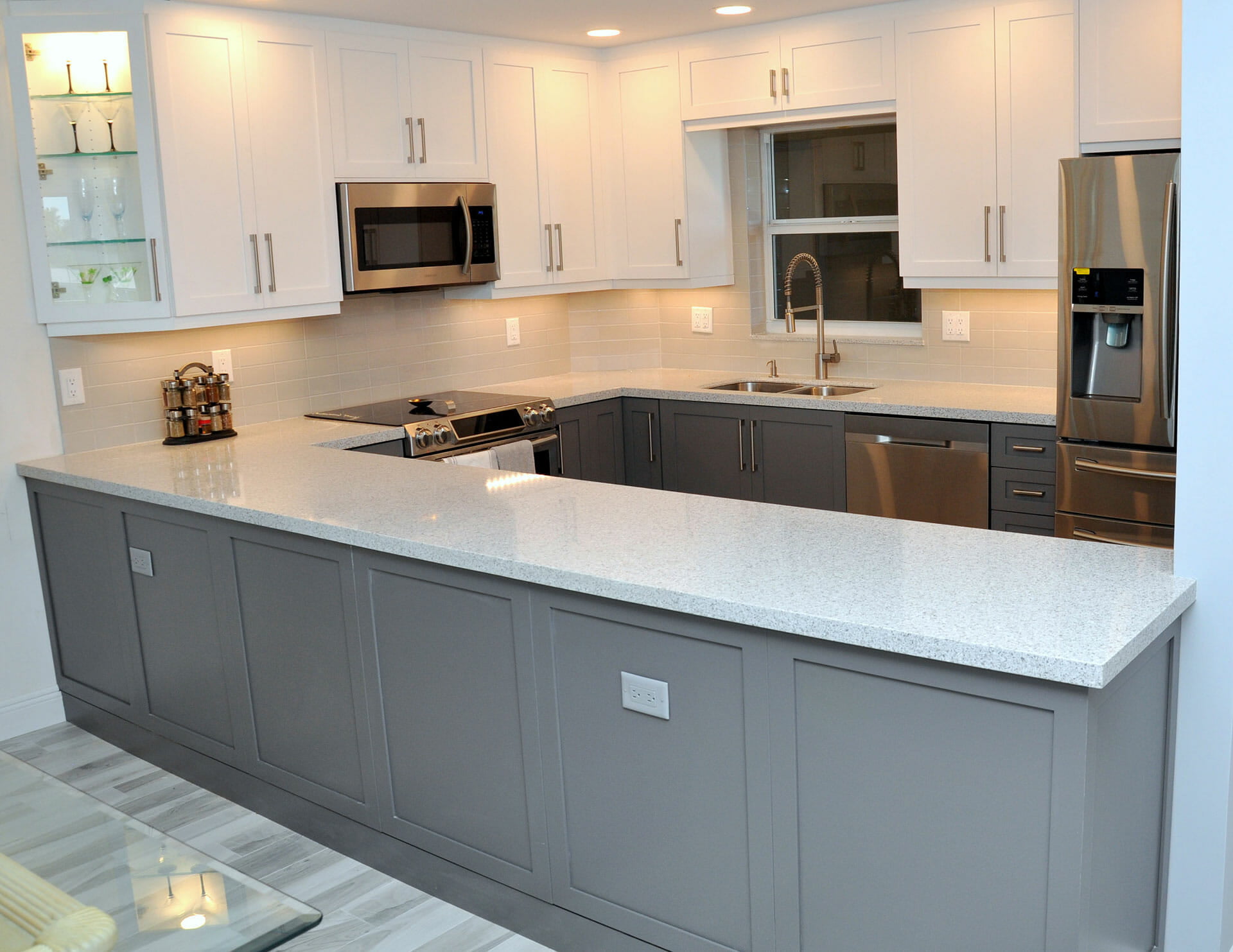
Paint gives you the widest color choice, from crisp white and soft greige to sage green, slate blue or deep charcoal. Paint covers the wood grain completely, so you get a solid, even color. It can be matched to a tile, a backsplash or a fabric in the room.

Paint is a surface layer, so it can chip at corners and edges that get bumped by pots and chair backs. The good news is that chips can be touched up. What the paint goes over matters, too. Solid wood frame-and-panel doors expand and contract with humidity, which can open hairline cracks in the paint where the panel meets the frame. Painted MDF doors are more stable and keep a smoother surface, which is why many painted kitchens use MDF panels.
Care: mild soap and water, a soft cloth, and no harsh solvents. Keep a small jar of the matching touch-up paint from the job.
Stained and natural wood
Stain soaks into the wood rather than sitting on top, so the grain stays visible and the finish is sealed with a clear topcoat. White oak brings a light, even grain that suits clean modern kitchens. Walnut is darker, with bold grain that adds warmth to a simple slab door. Wood is forgiving in daily use: grain and natural color variation hide small dings and smudges far better than a solid painted surface. On slab doors the wood is often a veneer over a stable core, which keeps wide panels flat.
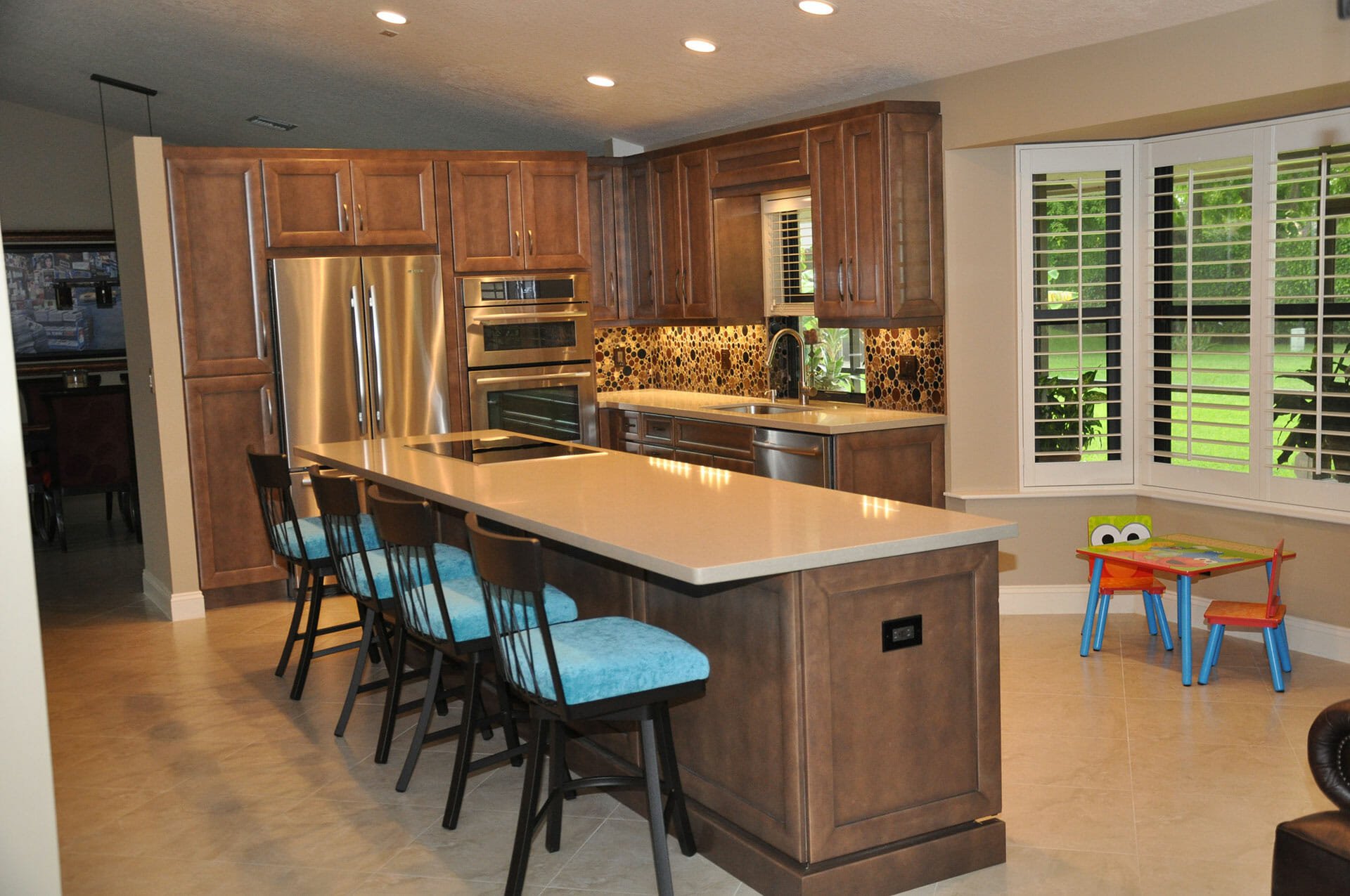
Two things to plan for. First, wood changes color with UV exposure from sunlight; many species darken or turn more amber over time, so doors next to a bright window can age differently from the ones in shade. Second, solid wood moves with humidity. A consistent indoor climate, with the air conditioning running steadily rather than switched off for long stretches, keeps that movement small.
Care: wipe with a damp cloth and dry. Avoid silicone-heavy polishes, which can build up and make future refinishing harder. Wood may eventually need its clear coat refreshed in high-use areas.
Thermofoil and laminate
Thermofoil is a vinyl layer heat-pressed over an MDF door. It gives a smooth, uniform surface that is easy to wipe and resists moisture on its face. Its weakness is heat. Doors right beside an oven, or over a toaster or coffee maker that vents steam upward, can bubble or peel over time, so heat shields and good appliance placement matter. Thermofoil cannot simply be repainted if you tire of the color.
Laminate is a harder plastic surface bonded to a core board. Melamine, a thinner version, is common on cabinet interiors. High-pressure laminate in particular stands up well to scratches and stains, and it comes in solid colors, wood-grain looks and fingerprint-resistant matte versions. The weak spot is the edges. If water gets past the edge banding into the core, the core can swell, so wipe up drips at the sink base and dishwasher promptly.
Care: a soft cloth with mild soap. Skip bleach and solvent cleaners, and keep standing water off the edges.
How the finishes compare in a humid, sunny kitchen
South Florida kitchens deal with year-round humidity, salt air near the coast, temperature swings from air conditioning and strong sun through big windows. Here is how each finish tends to handle those conditions.
| Finish | Humidity | Fingerprints and smudges | Direct sun | Repairs |
|---|---|---|---|---|
| Matte | Depends on the material underneath | Hidden on light colors; can show on dark ones | No glare | Paint can be touched up; laminate is replaced |
| High-gloss | Good; non-porous surface | Shows prints and water spots | Can glare | Fine scratches are hard to hide |
| Painted | Good on MDF; joints can crack on solid wood | Moderate | Colors can fade | Easy to touch up |
| Stained wood | Wood moves; needs a steady indoor climate | Grain hides most marks | Darkens or ambers | Can be refinished |
| Thermofoil | Good on the face | Easy to wipe | Can discolor; sensitive to heat | Peeling usually means a new door |
| Laminate | Good on the face; edges are the weak point | Low on fingerprint-resistant types | Holds color well | Damaged panels are replaced |
A few habits help any finish last:
- Let the dishwasher cool before opening it, so a burst of steam doesn’t hit the counter edge and nearby doors.
- Don’t hang damp towels over cabinet doors.
- Move steamy appliances out from under wall cabinets while they run.
- Use window treatments on the sunniest windows to slow fading and color change.
- Choose handles or pulls for the most-used doors, so hands land on hardware rather than the finish.
See finishes in your own light before you choose
Finish samples look different under store lighting than in your kitchen. Hold a sample door against your counter and floor, and look at it in the morning, in the afternoon and at night under your own lights. Run your hand across it, then see how the prints look. Finish works together with the shape of the door, so it helps to read up on cabinet door styles and on how custom, semi-custom and stock cabinets differ in the finishes they offer. Our guide to choosing cabinets for how you cook covers the storage side.
At Meltini Kitchen and Bath Designs, a family-owned remodeler serving South Florida since 2004, we lay out your finish choices in detailed 3D renderings so you can compare options and make revisions before anything is built. At our Fort Lauderdale showroom you can see and touch wood species, painted and glossy finishes, door styles and hardware side by side. Learn more about our kitchen design and remodeling services.
Schedule a free consultation to compare cabinet finishes in person.

- Kitchen Floor Plans: How the Six Classic Layouts Work and How to Pick One - December 2, 2025
- Countertop Installation Details: Edges, Thickness, Seams and Overhangs - December 2, 2025
- Kitchen Flooring for a Humid Climate: Tile, Vinyl, Wood and Stone Compared - November 6, 2025